
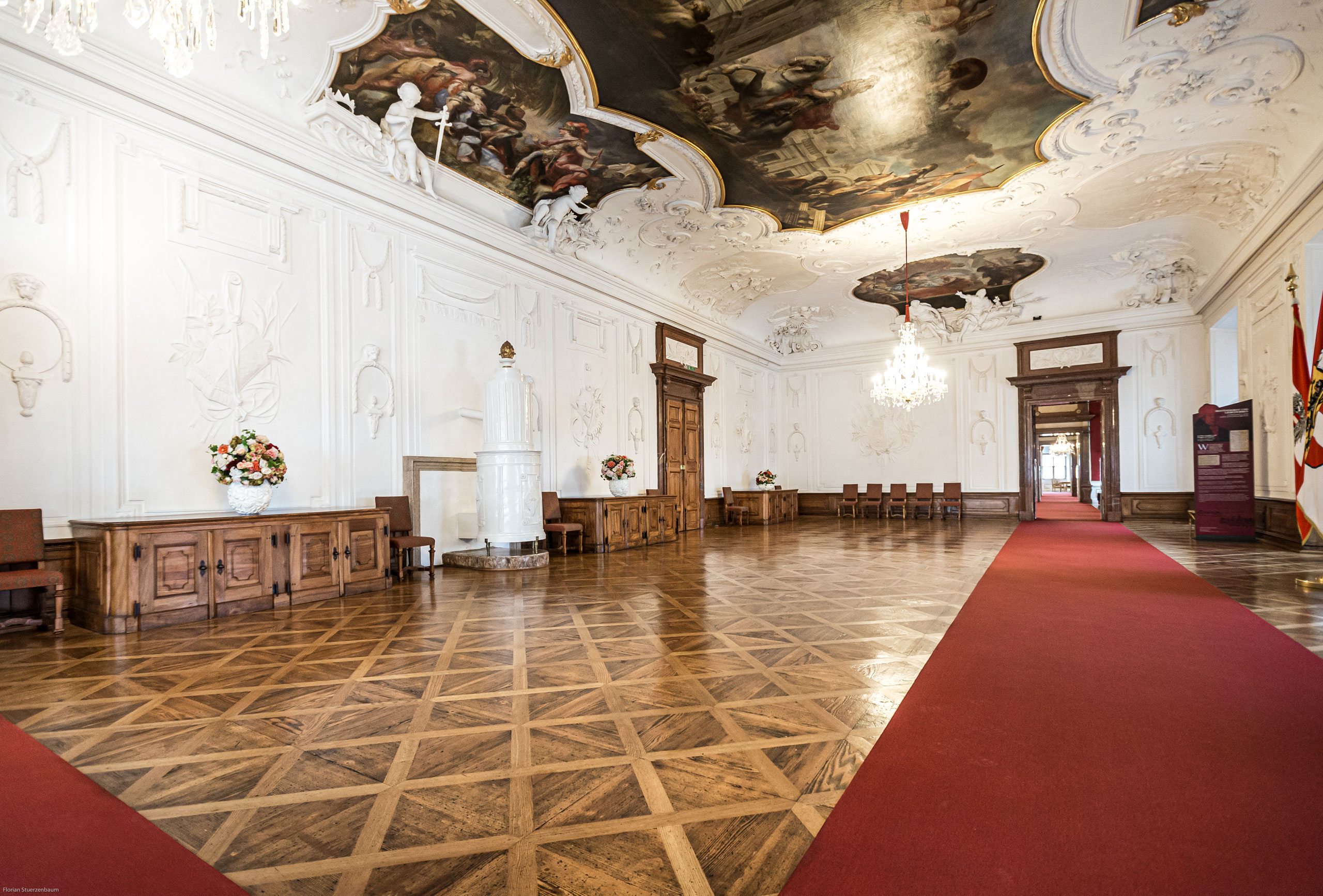
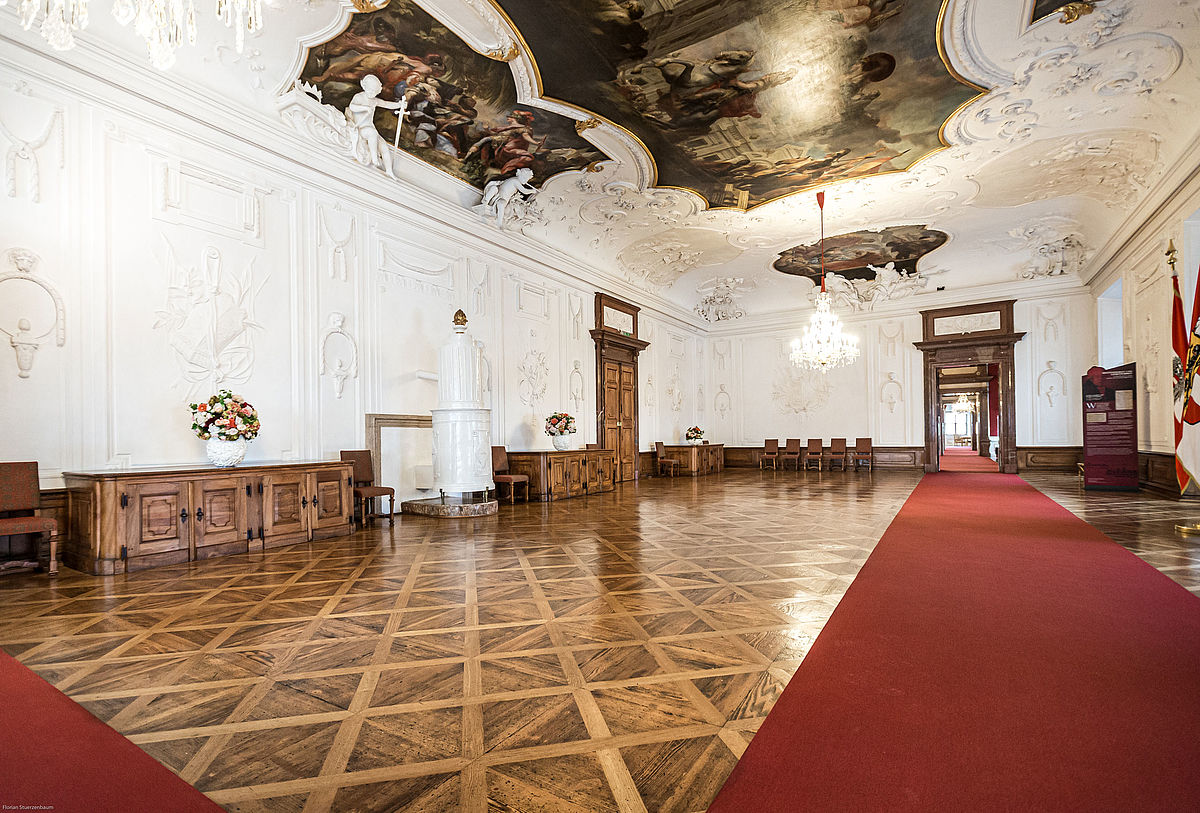
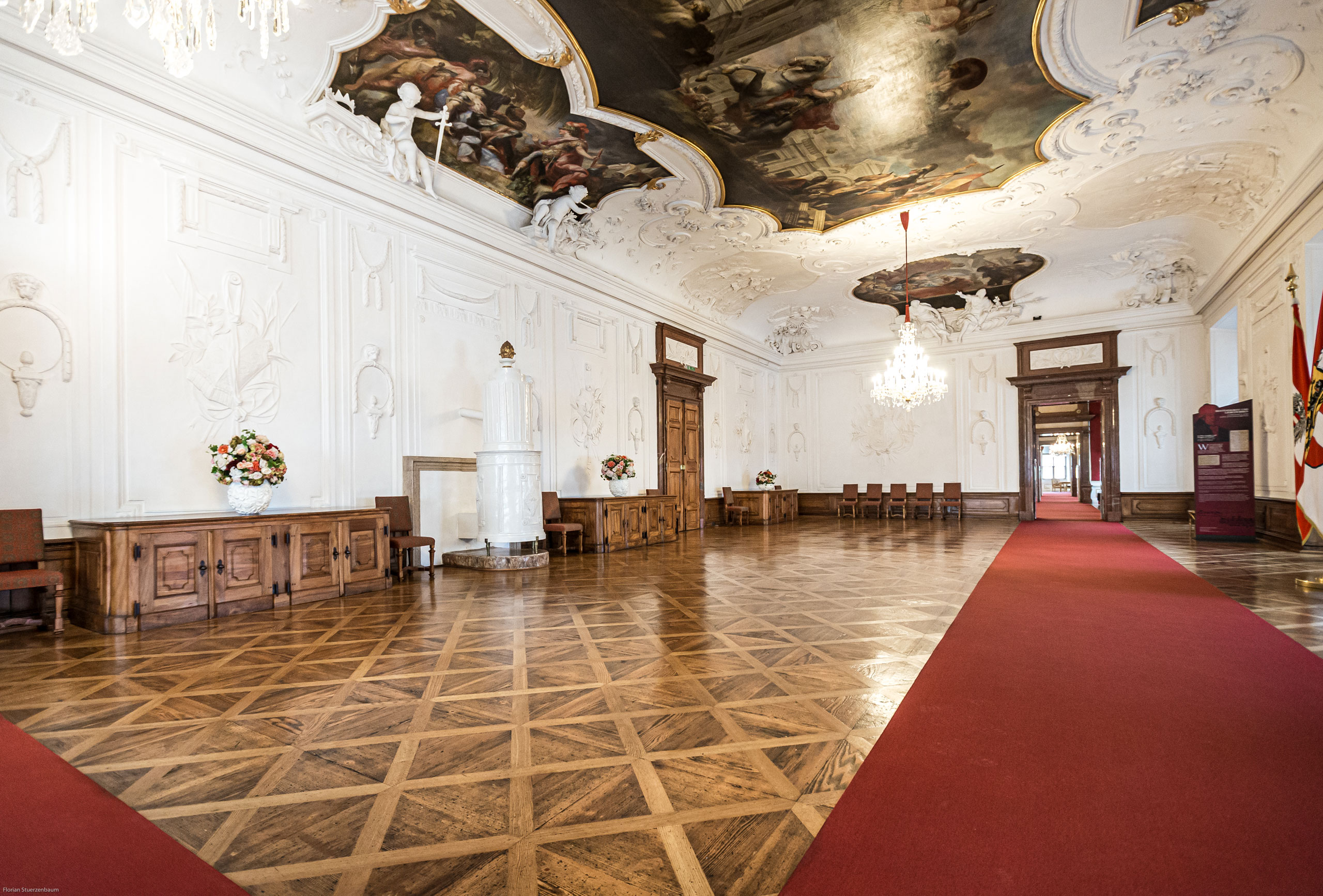
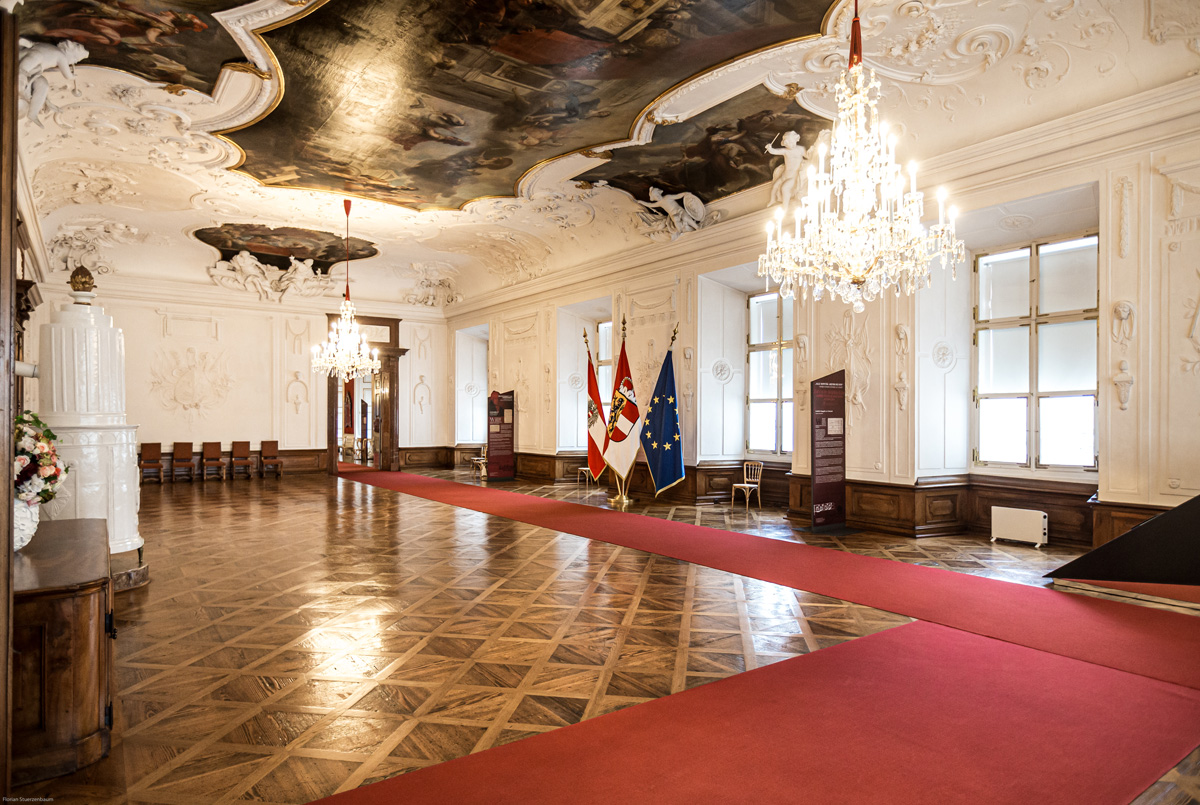
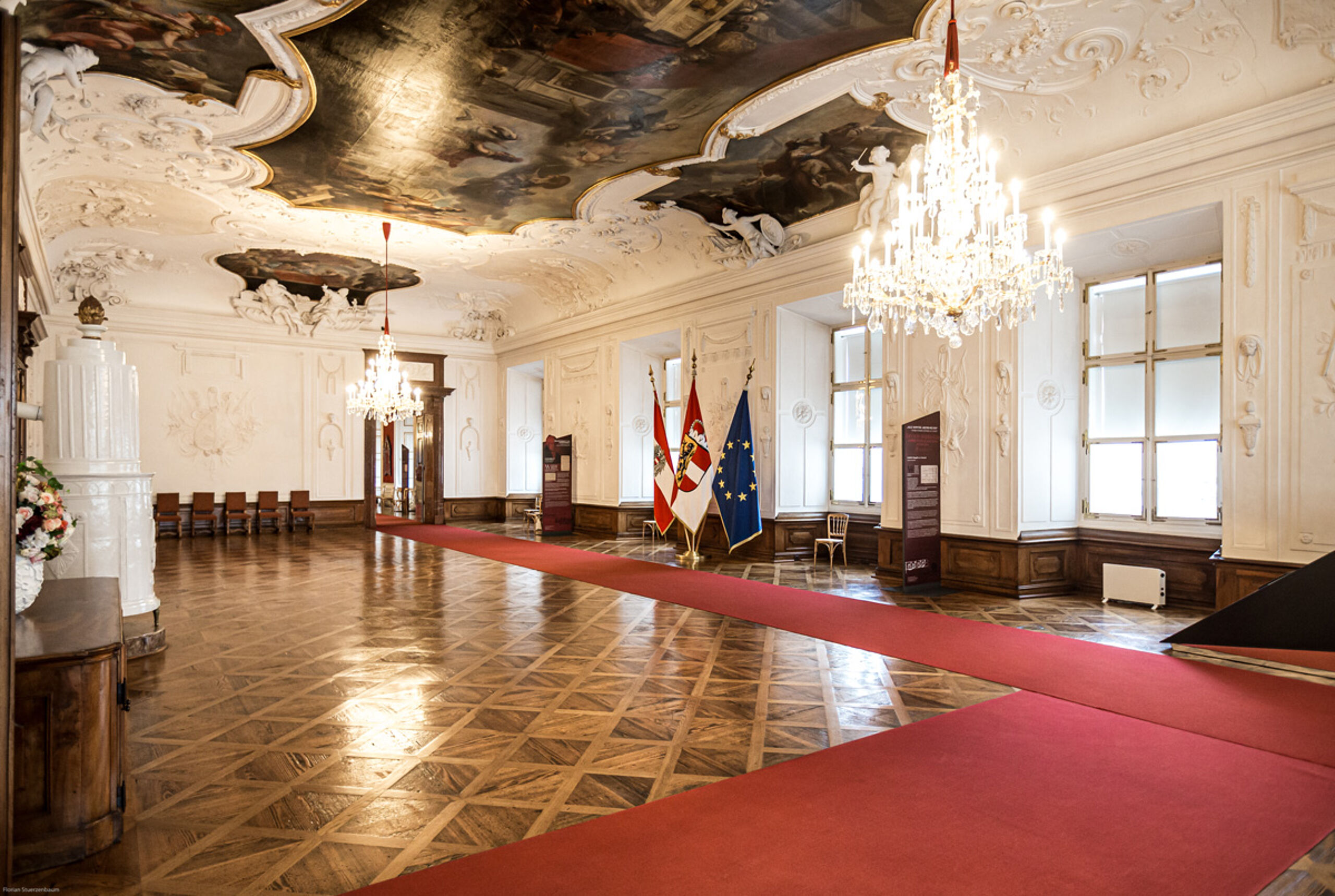
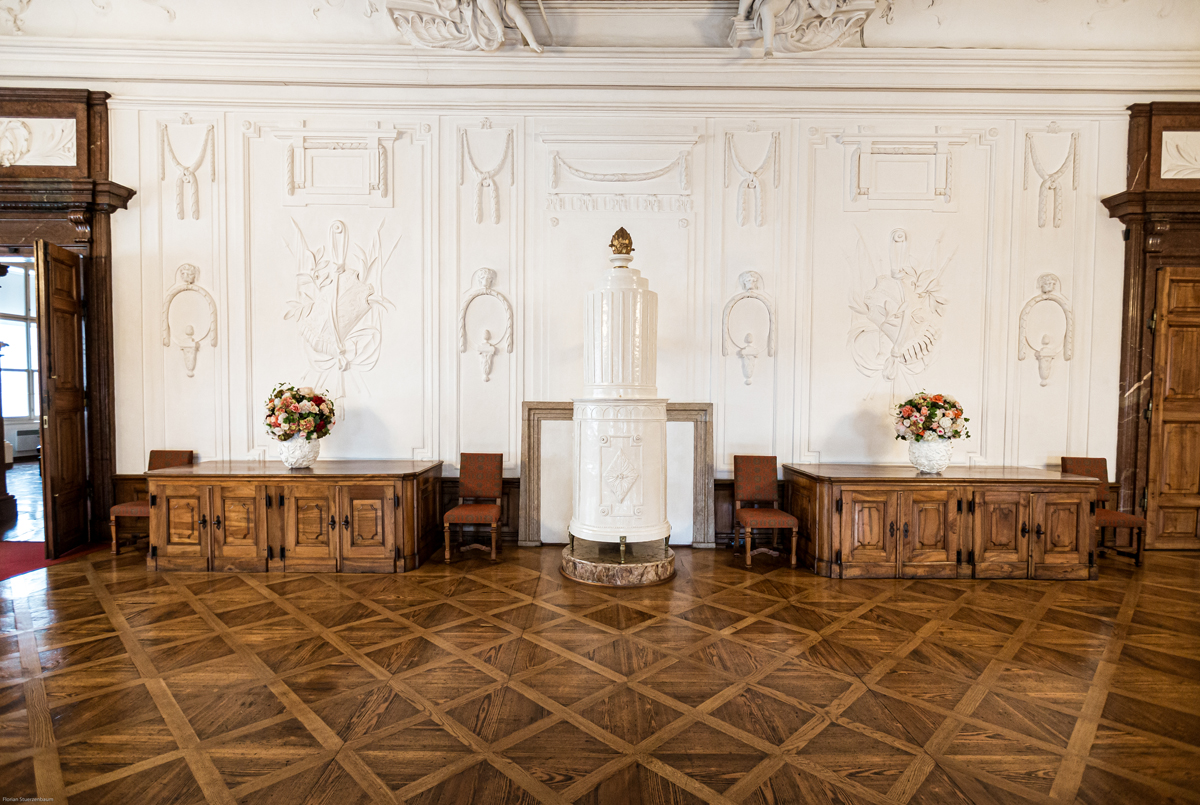
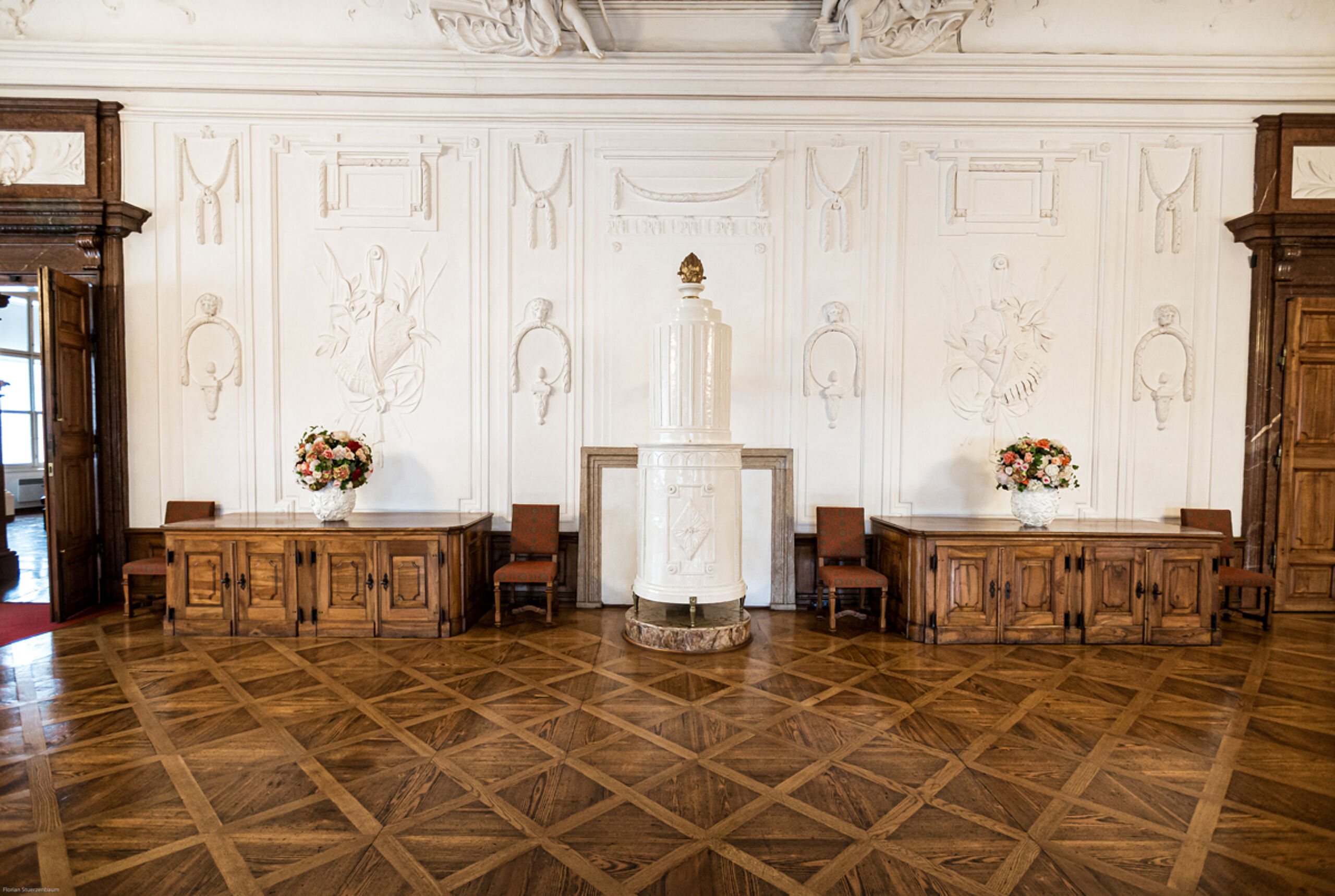
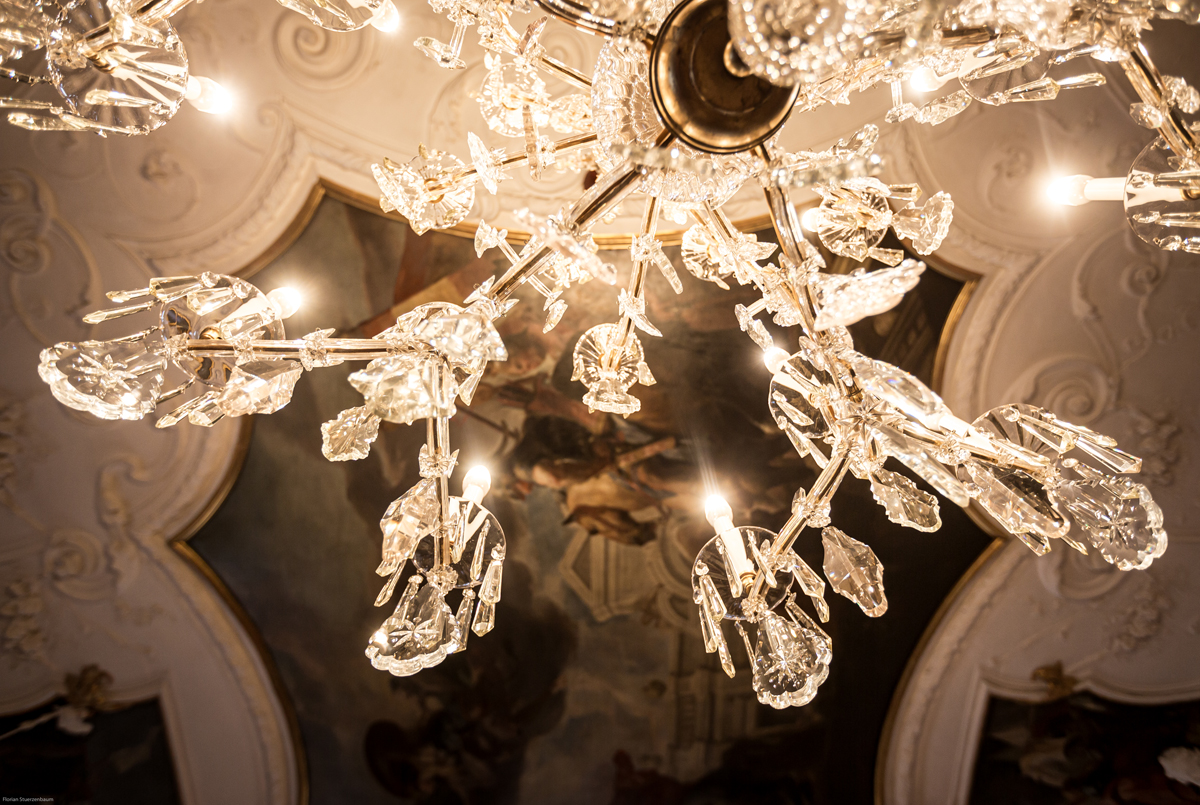

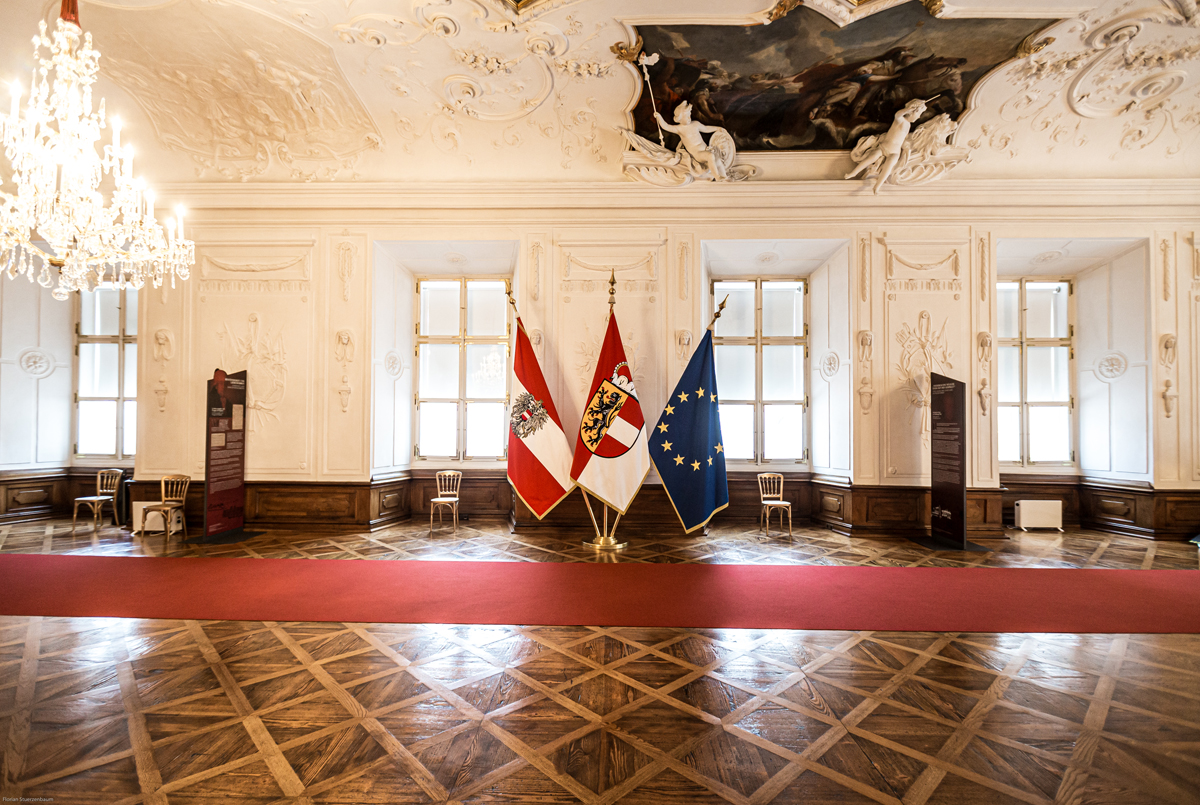

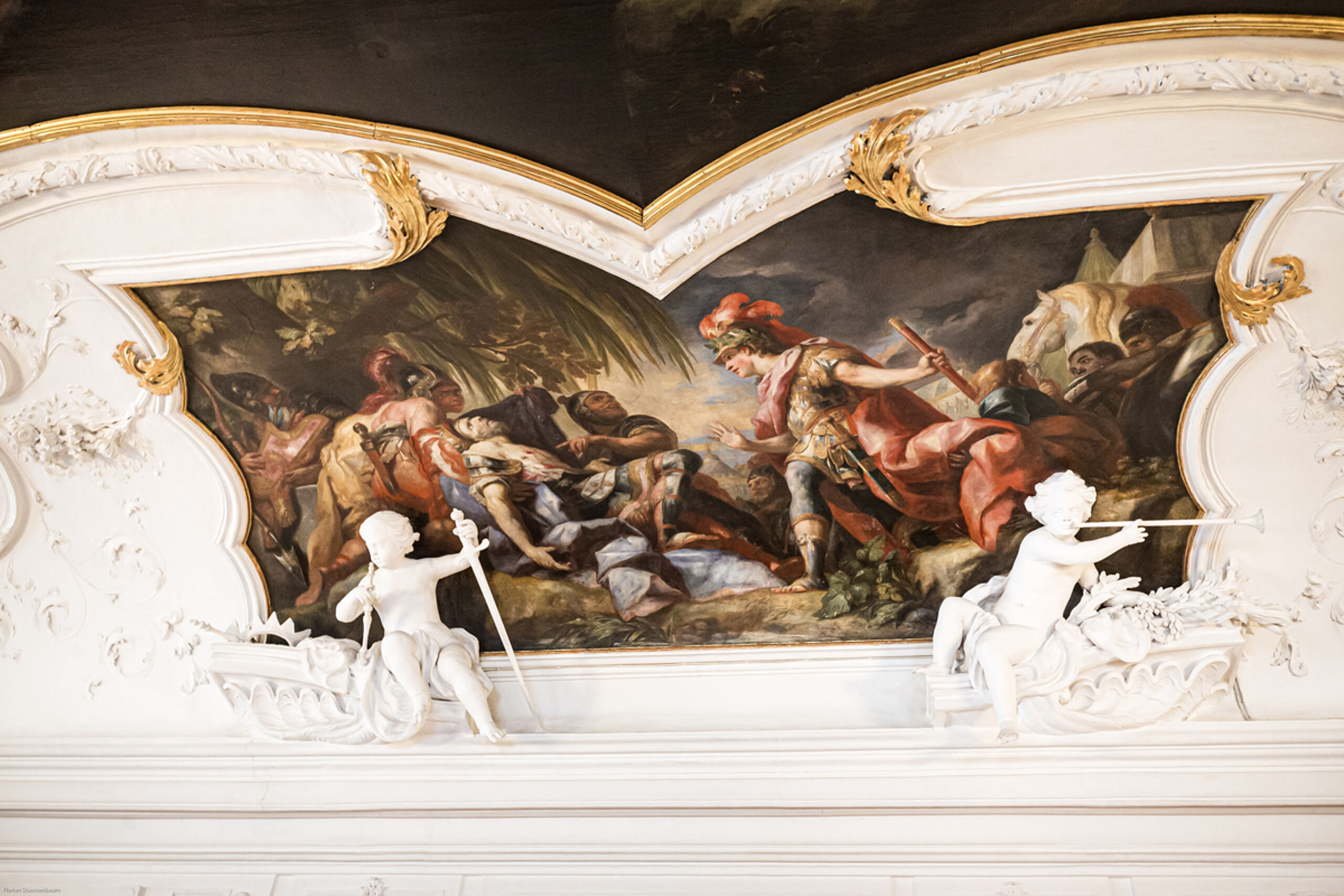
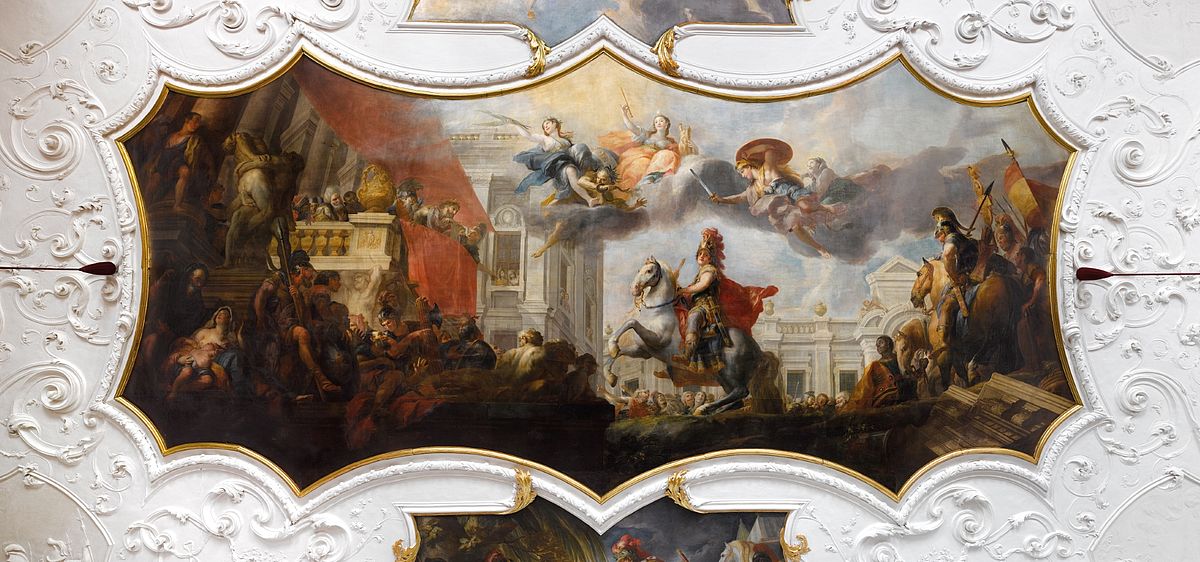
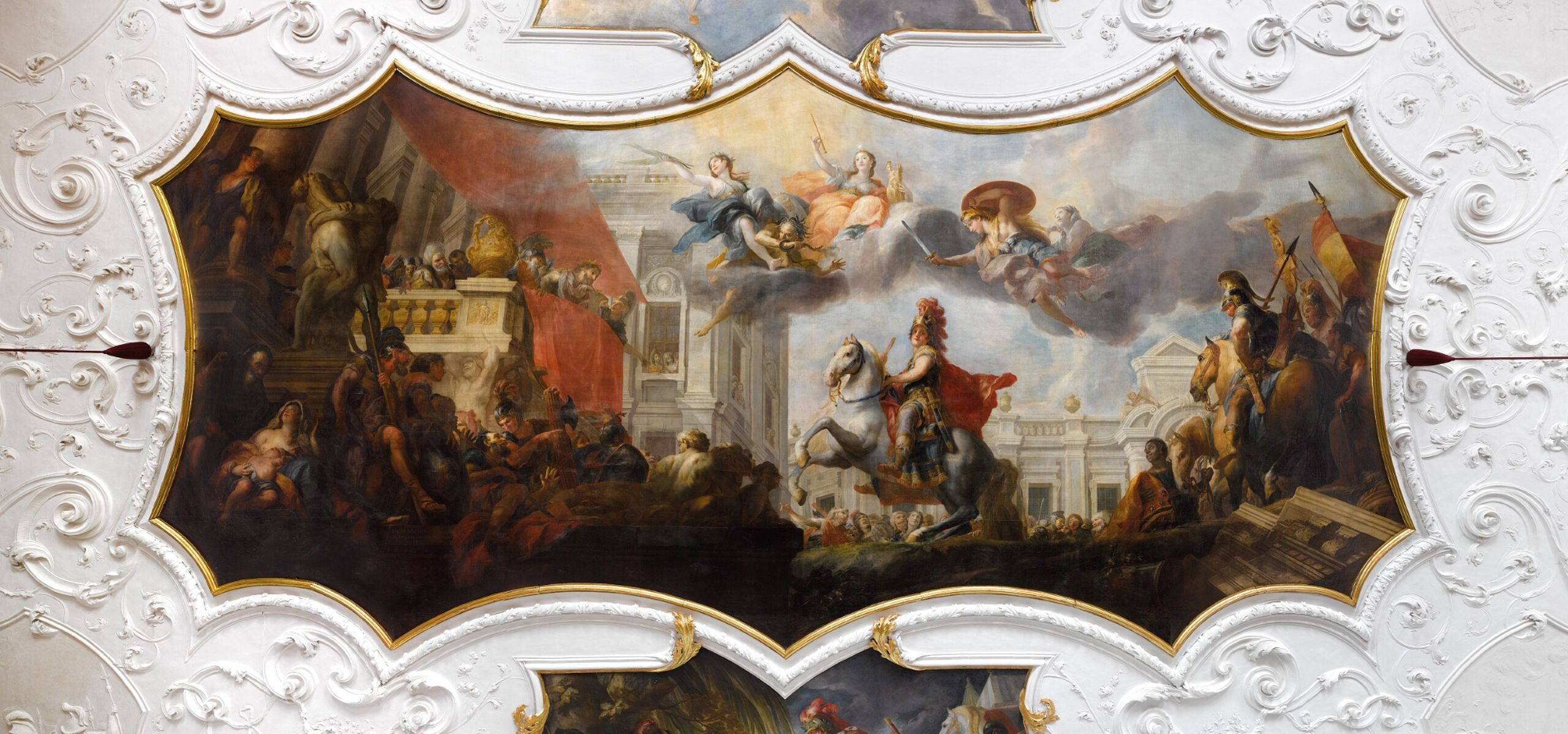
The Knights' hall is a magnificent example of baroque and classicistic staging. It served as an additional room for the knights of the prince's bodyguard, as well as being the anteroom to the prince-archbishop's state apartment, and was a sumptuous setting for transacting affairs of state.
Here the status of the visitor was the deciding factor; the more important and the higher his rank, the further he was permitted to penetrate into the chambers, and the rooms became proportionally smaller. Like so much of baroque symbolism, which over the centuries has disappeared from our collective memory, at that time the messages were quite clear to people. The allusions were understood; people knew exactly how they were supposed to comport themselves at court.
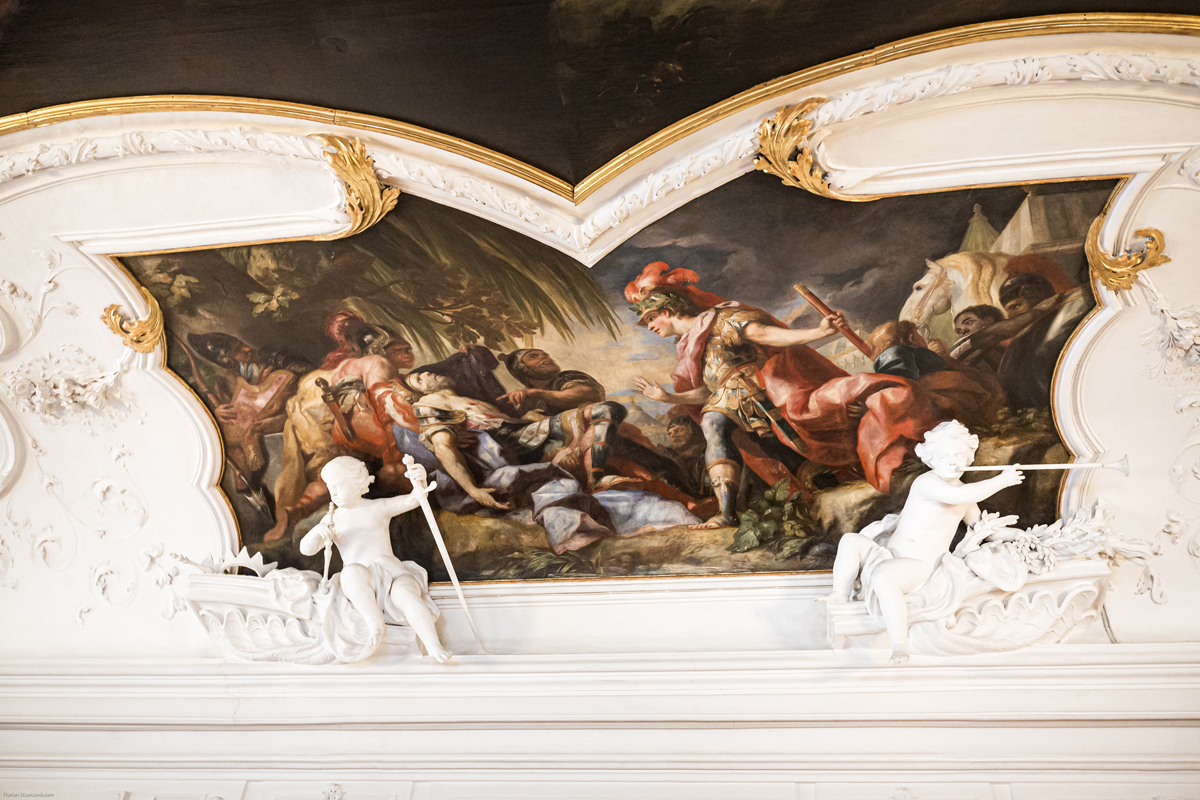
The stories represented on the ceilings were to be interpreted as well-directed statements from the ruler. Under Prince-Archbishop Franz Anton Harrach (1709–1727), Johann Michael Rottmayr was commissioned to make a series of paintings illustrating the career of Alexander the Great, starting in the Knights' hall and accompanying the marvelling viewers through the subsequent rooms. The archbishops liked to attribute to themselves the chivalrous virtues of the great ruler and conqueror.
| Rooms |  |  |  |  |  |  |  |  |  |
| Carabinieri Hall | 525 | 525 | 396 | 170 | 123 | 114 | 376 | 50x12 | 640 |
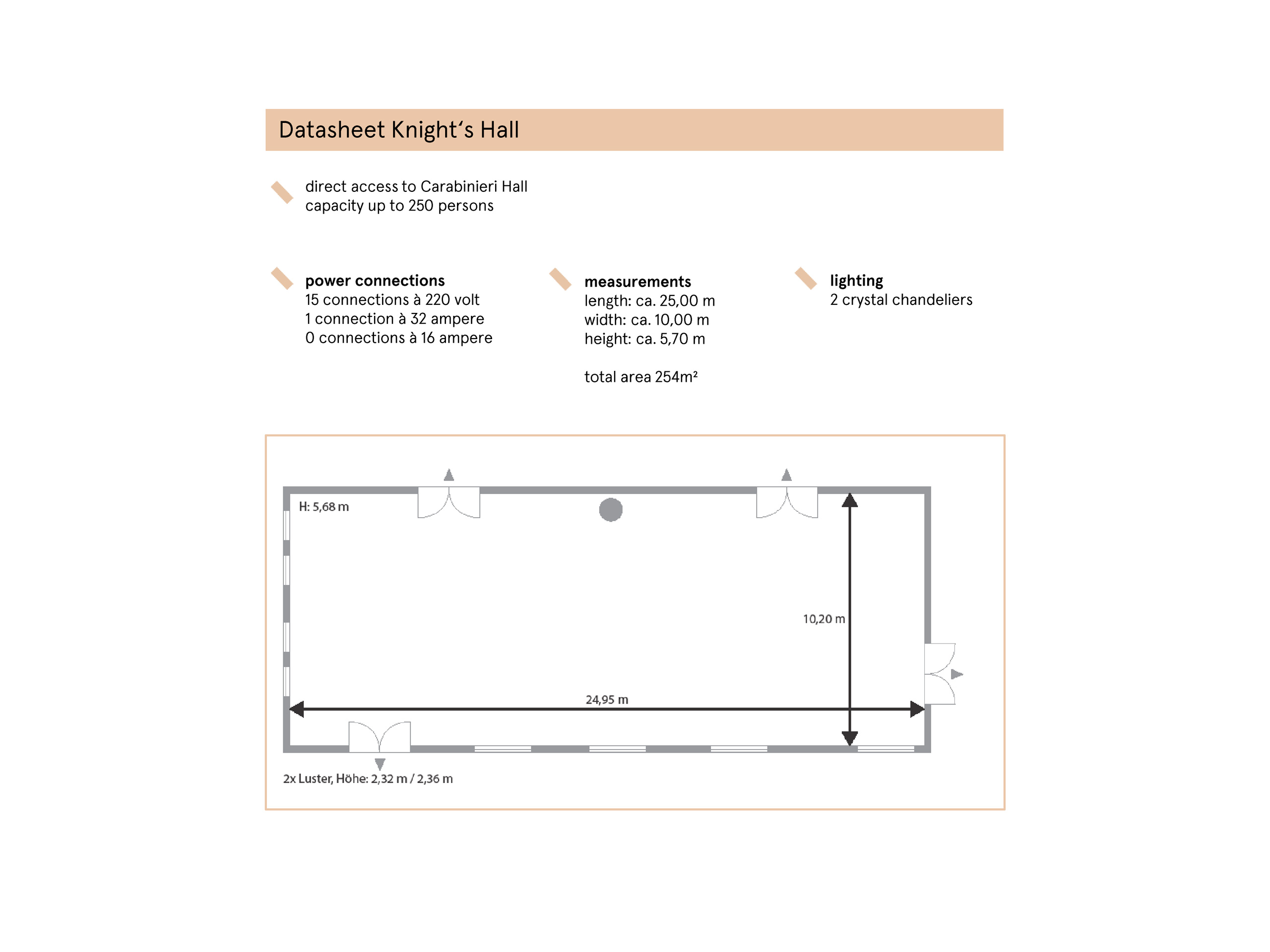
| Knights Hall | 220 | 250 | 160 | 108 | 64 | 69 | 186 | 25x10 | 255 |
| Conference Hall | 150 | 160 | 99 | 76 | 40 | 44 | 120 | 14,94x12,82 | 190 |
| Antecamera | 60 | 60 | 55 | 27 | 34 | 21 | 56 | 10,05x9,85 | 100 |
| Imperial Hall | 150 | 150 | 99 | 89 | 56 | 48 | 88 | 19,42x9,11 | 176 |
| Throne Room | 120 | 120 | 99 | 48 | 52 | 52 | 120 | 20,24x8,76 | 177 |
| White Hall | 120 | 120 | 99 | 48 | 48 | 42 | 96 | 19,46x8,80 | 171 |
| Audience Hall | 90 | 100 | 66 | 48 | 42 | 36 | 30 | 13,79x9,84 | 135 |
| Arcades | - | 525 | - | - | - | - | - | 30,10x10,30 | 310 |
| Inner courtyard with arcades | - | 525 | - | - | - | - | - | 45,00x24,70 | 1.070 |