A stucco figure in the Rittersaal
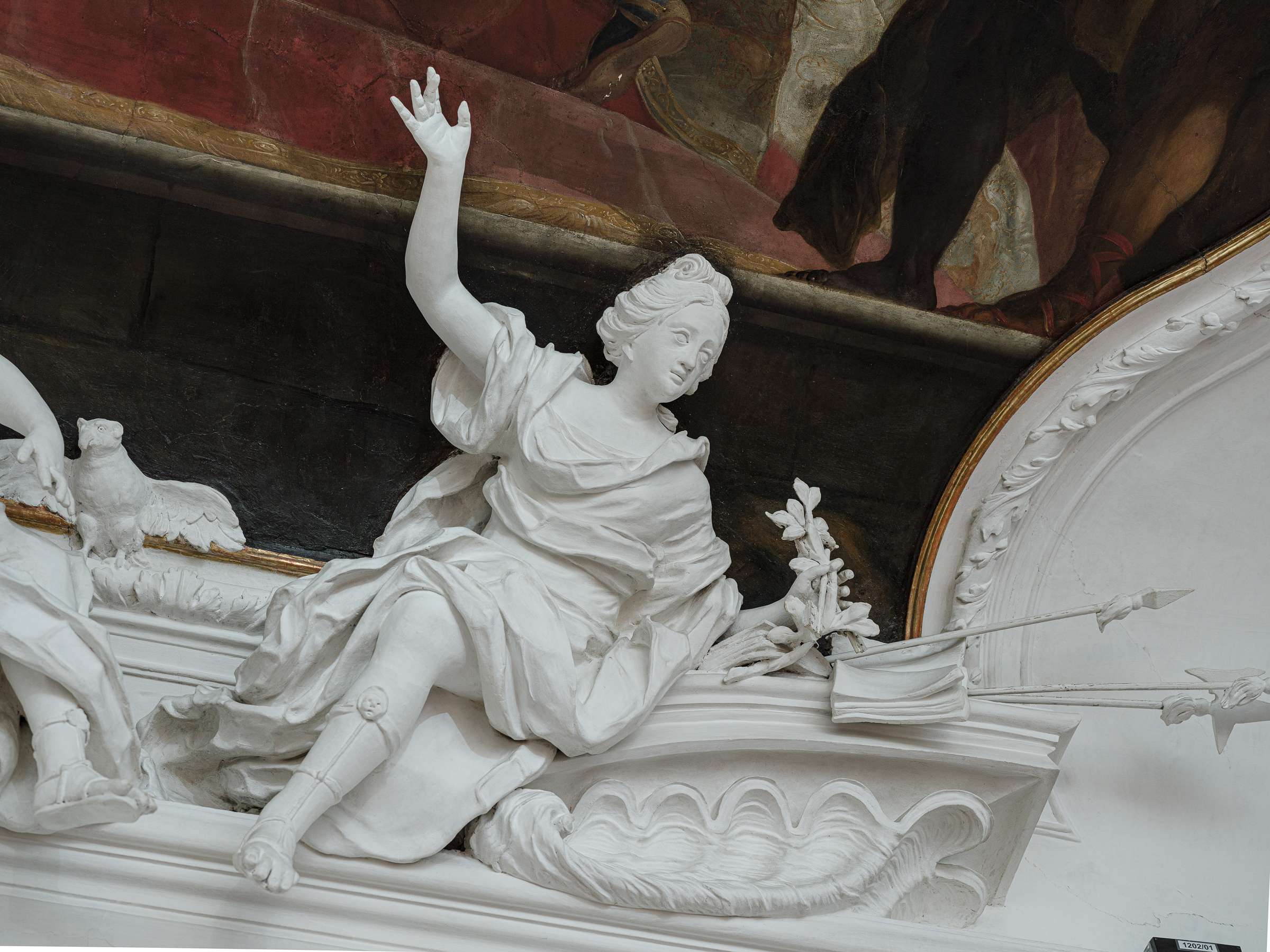
This figure perched high under the ceiling is made of the finest stucco. It is part of a group of four groups female and infants, known as putti. These figures form a symbolic complement to the stories told in the ceiling paintings.
The woman’s accessories are a palm branch symbolising peace and victory, a book representing wisdom, and weapons for war and combat. Her raised arm points up to the painting showing the Indian King Porus being reinstated in his kingdom. The stucco figure can be seen as a symbol of wise rule.
The figures were made by Alberto Camesina, a stuccoer at the Viennese court. Around 1710, he was commissioned by Prince-Archbishop Franz Anton Harrach to decorate the ceiling with stucco-work. Camesina created not only the figures, but also the typical baroque stucco ornaments and reliefs on the ceiling.
Camesina received a higher fee for his work in the Residenz than the two artists, Johann Michael Rottmayr and Martino Altomonte, who created the ceiling painting.