Experience the former prince-archbishopric – centre of power
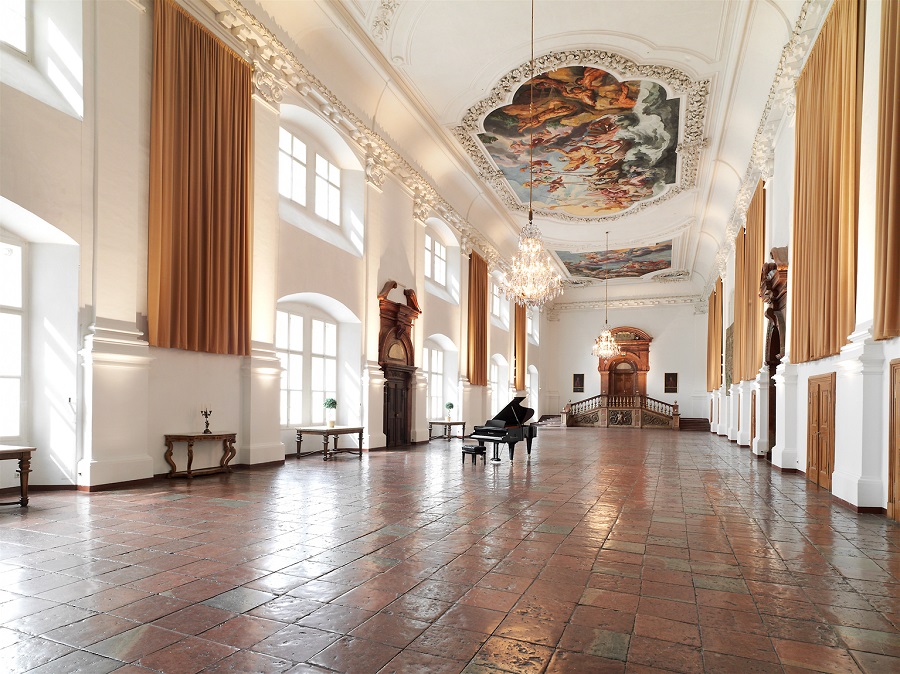
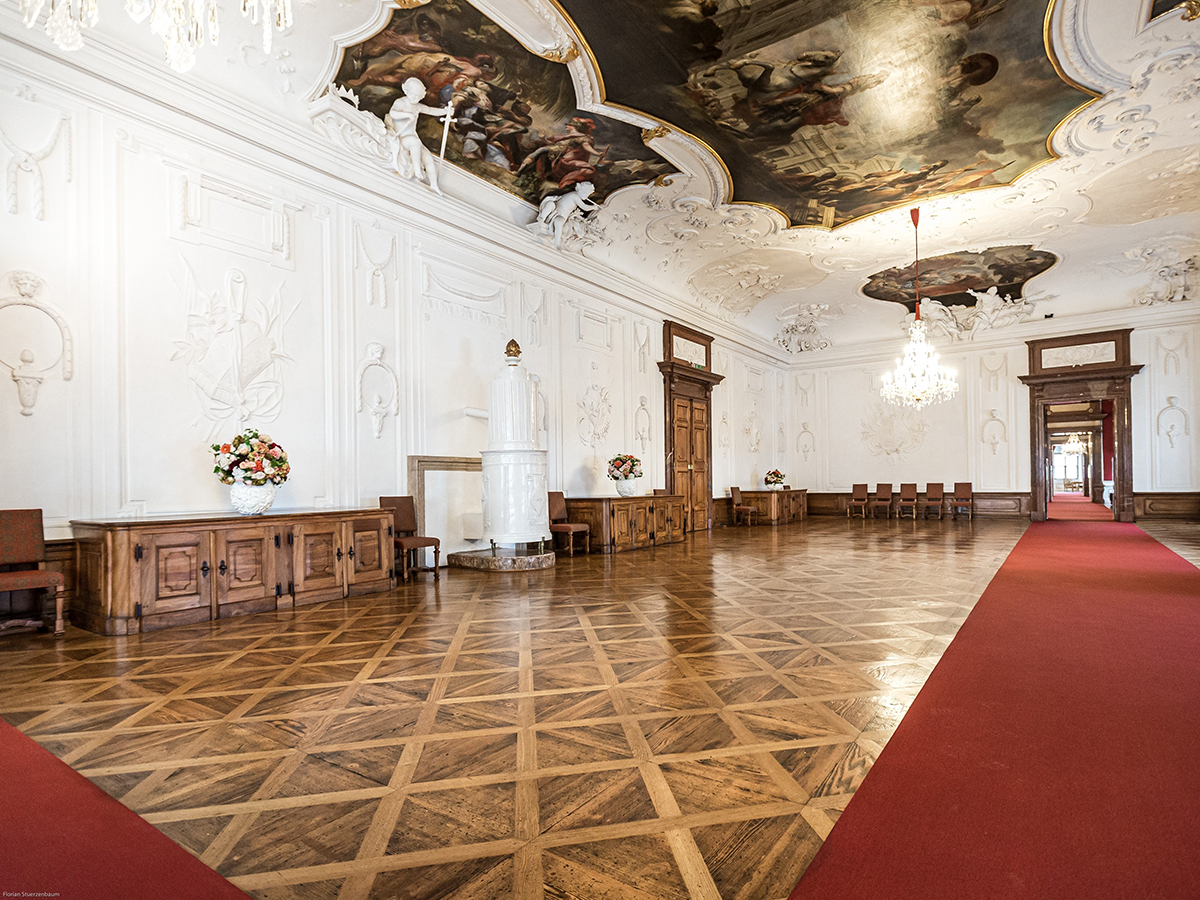
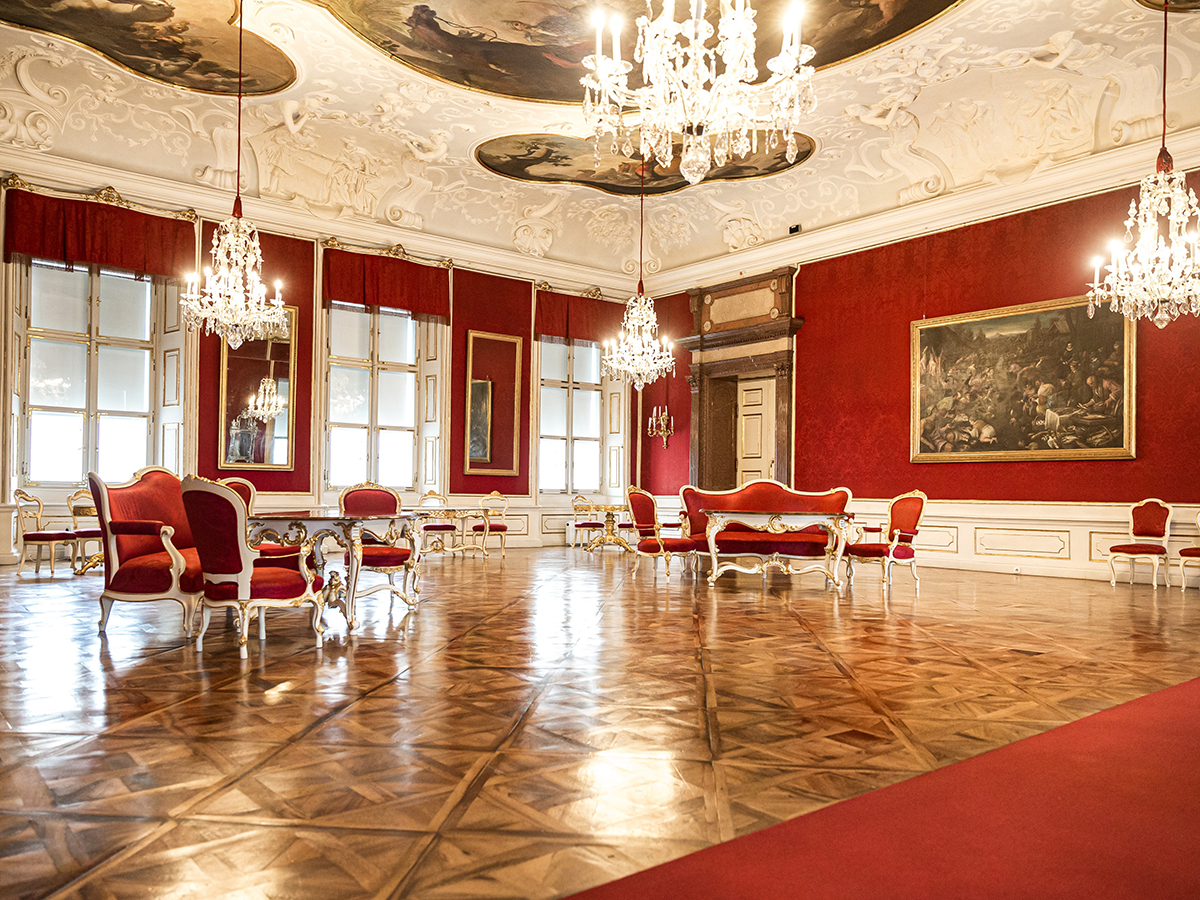
Walk through the splendidly furnished state rooms in the Residenz and view exquisite paintings in the Residenzgalerie. The terrace on the Cathedral arcade offers incomparable views of the baroque heart of Salzburg and beyond. The Cathedral Museum presents sacred Gothic and baroque art treasures. You will visit the fantastic Cabinet of Curiosities, the Long Gallery of St. Peter’s Archabbey and St. Peter‘s Museum, where you will see valuable objects from the collection of the venerable Benedictine monastery.
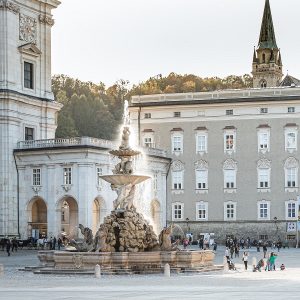
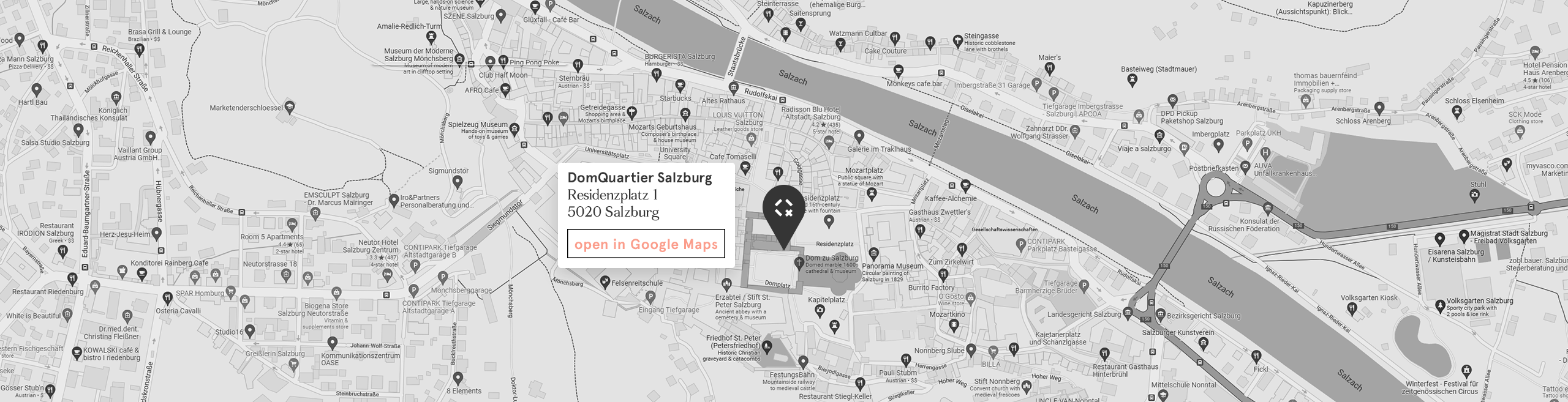
Meeting point: Inner courtyard of the Residenz, Hercules Fountain Cost: Ticket + € 4,– guide fee
Online ticket recommended
Due to limited number of participants
Remaining places can be requested at the ticket office or in advance by telephone.
Experience the former prince-archbishopric – centre of power
Walk through the splendidly furnished state rooms in the Residenz and view exquisite paintings in the Residenzgalerie. The terrace on the Cathedral arcade offers incomparable views of the baroque heart of Salzburg and beyond. The Cathedral Museum presents sacred Gothic and baroque art treasures. You will visit the fantastic Cabinet of Curiosities, the Long Gallery of St. Peter’s Archabbey and St. Peter‘s Museum, where you will see valuable objects from the collection of the venerable Benedictine monastery.
Meeting point: Inner courtyard of the Residenz, Hercules Fountain Cost: Ticket + € 4,– guide fee
Online ticket recommended
Due to limited number of participants
Remaining places can be requested at the ticket office or in advance by telephone.
Experience the former prince-archbishopric – centre of power
Walk through the splendidly furnished state rooms in the Residenz and view exquisite paintings in the Residenzgalerie. The terrace on the Cathedral arcade offers incomparable views of the baroque heart of Salzburg and beyond. The Cathedral Museum presents sacred Gothic and baroque art treasures. You will visit the fantastic Cabinet of Curiosities, the Long Gallery of St. Peter’s Archabbey and St. Peter‘s Museum, where you will see valuable objects from the collection of the venerable Benedictine monastery.
Meeting point: Inner courtyard of the Residenz, Hercules Fountain Cost: Ticket + € 4,– guide fee
Online ticket recommended
Due to limited number of participants
Remaining places can be requested at the ticket office or in advance by telephone.
Experience the former prince-archbishopric – centre of power
Walk through the splendidly furnished state rooms in the Residenz and view exquisite paintings in the Residenzgalerie. The terrace on the Cathedral arcade offers incomparable views of the baroque heart of Salzburg and beyond. The Cathedral Museum presents sacred Gothic and baroque art treasures. You will visit the fantastic Cabinet of Curiosities, the Long Gallery of St. Peter’s Archabbey and St. Peter‘s Museum, where you will see valuable objects from the collection of the venerable Benedictine monastery.
Meeting point: Inner courtyard of the Residenz, Hercules Fountain Cost: Ticket + € 4,– guide fee
Online ticket recommended
Due to limited number of participants
Remaining places can be requested at the ticket office or in advance by telephone.
Experience the former prince-archbishopric – centre of power
Walk through the splendidly furnished state rooms in the Residenz and view exquisite paintings in the Residenzgalerie. The terrace on the Cathedral arcade offers incomparable views of the baroque heart of Salzburg and beyond. The Cathedral Museum presents sacred Gothic and baroque art treasures. You will visit the fantastic Cabinet of Curiosities, the Long Gallery of St. Peter’s Archabbey and St. Peter‘s Museum, where you will see valuable objects from the collection of the venerable Benedictine monastery.
Meeting point: Inner courtyard of the Residenz, Hercules Fountain Cost: Ticket + € 4,– guide fee
Online ticket recommended
Due to limited number of participants
Remaining places can be requested at the ticket office or in advance by telephone.
Experience the former prince-archbishopric – centre of power
Walk through the splendidly furnished state rooms in the Residenz and view exquisite paintings in the Residenzgalerie. The terrace on the Cathedral arcade offers incomparable views of the baroque heart of Salzburg and beyond. The Cathedral Museum presents sacred Gothic and baroque art treasures. You will visit the fantastic Cabinet of Curiosities, the Long Gallery of St. Peter’s Archabbey and St. Peter‘s Museum, where you will see valuable objects from the collection of the venerable Benedictine monastery.
Meeting point: Inner courtyard of the Residenz, Hercules Fountain Cost: Ticket + € 4,– guide fee
Online ticket recommended
Due to limited number of participants
Remaining places can be requested at the ticket office or in advance by telephone.
Experience the former prince-archbishopric – centre of power
Walk through the splendidly furnished state rooms in the Residenz and view exquisite paintings in the Residenzgalerie. The terrace on the Cathedral arcade offers incomparable views of the baroque heart of Salzburg and beyond. The Cathedral Museum presents sacred Gothic and baroque art treasures. You will visit the fantastic Cabinet of Curiosities, the Long Gallery of St. Peter’s Archabbey and St. Peter‘s Museum, where you will see valuable objects from the collection of the venerable Benedictine monastery.
Meeting point: Inner courtyard of the Residenz, Hercules Fountain Cost: Ticket + € 4,– guide fee
Online ticket recommended
Due to limited number of participants
Remaining places can be requested at the ticket office or in advance by telephone.
Experience the former prince-archbishopric – centre of power
Walk through the splendidly furnished state rooms in the Residenz and view exquisite paintings in the Residenzgalerie. The terrace on the Cathedral arcade offers incomparable views of the baroque heart of Salzburg and beyond. The Cathedral Museum presents sacred Gothic and baroque art treasures. You will visit the fantastic Cabinet of Curiosities, the Long Gallery of St. Peter’s Archabbey and St. Peter‘s Museum, where you will see valuable objects from the collection of the venerable Benedictine monastery.
Meeting point: Inner courtyard of the Residenz, Hercules Fountain Cost: Ticket + € 4,– guide fee
Online ticket recommended
Due to limited number of participants
Remaining places can be requested at the ticket office or in advance by telephone.
Experience the former prince-archbishopric – centre of power
Walk through the splendidly furnished state rooms in the Residenz and view exquisite paintings in the Residenzgalerie. The terrace on the Cathedral arcade offers incomparable views of the baroque heart of Salzburg and beyond. The Cathedral Museum presents sacred Gothic and baroque art treasures. You will visit the fantastic Cabinet of Curiosities, the Long Gallery of St. Peter’s Archabbey and St. Peter‘s Museum, where you will see valuable objects from the collection of the venerable Benedictine monastery.
Meeting point: Inner courtyard of the Residenz, Hercules Fountain Cost: Ticket + € 4,– guide fee
Online ticket recommended
Due to limited number of participants
Remaining places can be requested at the ticket office or in advance by telephone.
Experience the former prince-archbishopric – centre of power
Walk through the splendidly furnished state rooms in the Residenz and view exquisite paintings in the Residenzgalerie. The terrace on the Cathedral arcade offers incomparable views of the baroque heart of Salzburg and beyond. The Cathedral Museum presents sacred Gothic and baroque art treasures. You will visit the fantastic Cabinet of Curiosities, the Long Gallery of St. Peter’s Archabbey and St. Peter‘s Museum, where you will see valuable objects from the collection of the venerable Benedictine monastery.
Meeting point: Inner courtyard of the Residenz, Hercules Fountain Cost: Ticket + € 4,– guide fee
Online ticket recommended
Due to limited number of participants
Remaining places can be requested at the ticket office or in advance by telephone.
Experience the former prince-archbishopric – centre of power
Walk through the splendidly furnished state rooms in the Residenz and view exquisite paintings in the Residenzgalerie. The terrace on the Cathedral arcade offers incomparable views of the baroque heart of Salzburg and beyond. The Cathedral Museum presents sacred Gothic and baroque art treasures. You will visit the fantastic Cabinet of Curiosities, the Long Gallery of St. Peter’s Archabbey and St. Peter‘s Museum, where you will see valuable objects from the collection of the venerable Benedictine monastery.
Meeting point: Inner courtyard of the Residenz, Hercules Fountain Cost: Ticket + € 4,– guide fee
Online ticket recommended
Due to limited number of participants
Remaining places can be requested at the ticket office or in advance by telephone.
Experience the former prince-archbishopric – centre of power
Walk through the splendidly furnished state rooms in the Residenz and view exquisite paintings in the Residenzgalerie. The terrace on the Cathedral arcade offers incomparable views of the baroque heart of Salzburg and beyond. The Cathedral Museum presents sacred Gothic and baroque art treasures. You will visit the fantastic Cabinet of Curiosities, the Long Gallery of St. Peter’s Archabbey and St. Peter‘s Museum, where you will see valuable objects from the collection of the venerable Benedictine monastery.
Meeting point: Inner courtyard of the Residenz, Hercules Fountain Cost: Ticket + € 4,– guide fee
Online ticket recommended
Due to limited number of participants
Remaining places can be requested at the ticket office or in advance by telephone.
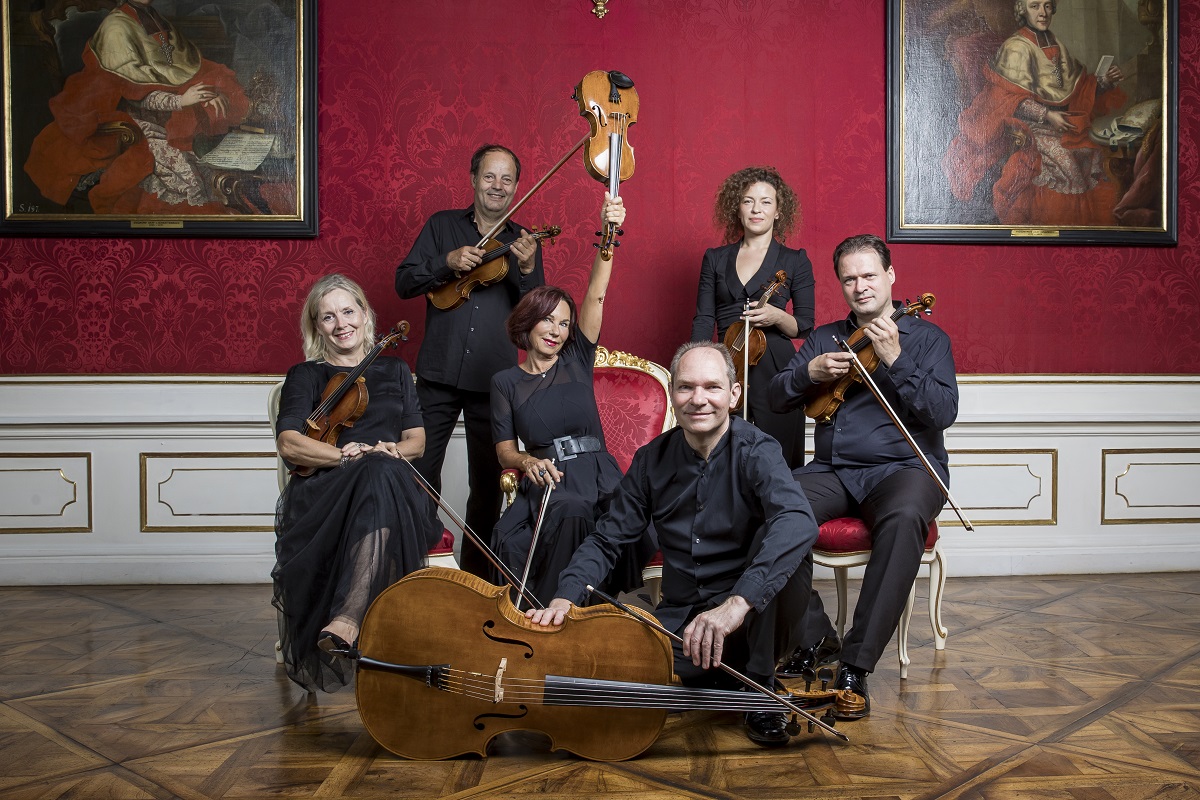
Listen to Mozart’s works where he himself performed them! The Salzburg Residenz is the very place for which the young Mozart composed his music, and where he performed regularly. Our concert series “Date with Mozart” is performed by members of our Residenz-Ensemble in a chamber music setting. Depending on the programme, which changes regularly, two to four musicians will perform. The exact programme will be published in advance. >> TO THE PROGRAMME
Music in the heart of the UNESCO World Heritage Site
What Mozart’s music is to the ears, the state rooms are to the eyes – and both together represent a unique space-sound experience that is unrivalled. For all those who want to be close to the spirit of the master in the heart of the UNESCO World Heritage Site.
Let Mozart’s music enchant you – and his culinary favorites tempt you.
You can experience something truly special that combines the magic of Mozart’s music with delightful cuisine. Our concert series “Date with Mozart” at the DomQuartier Salzburg invites you to immerse yourself in the world of the musical genius – and afterward, savor his favorite dish atRestaurant Herzl (Hotel Goldener Hirsch)!
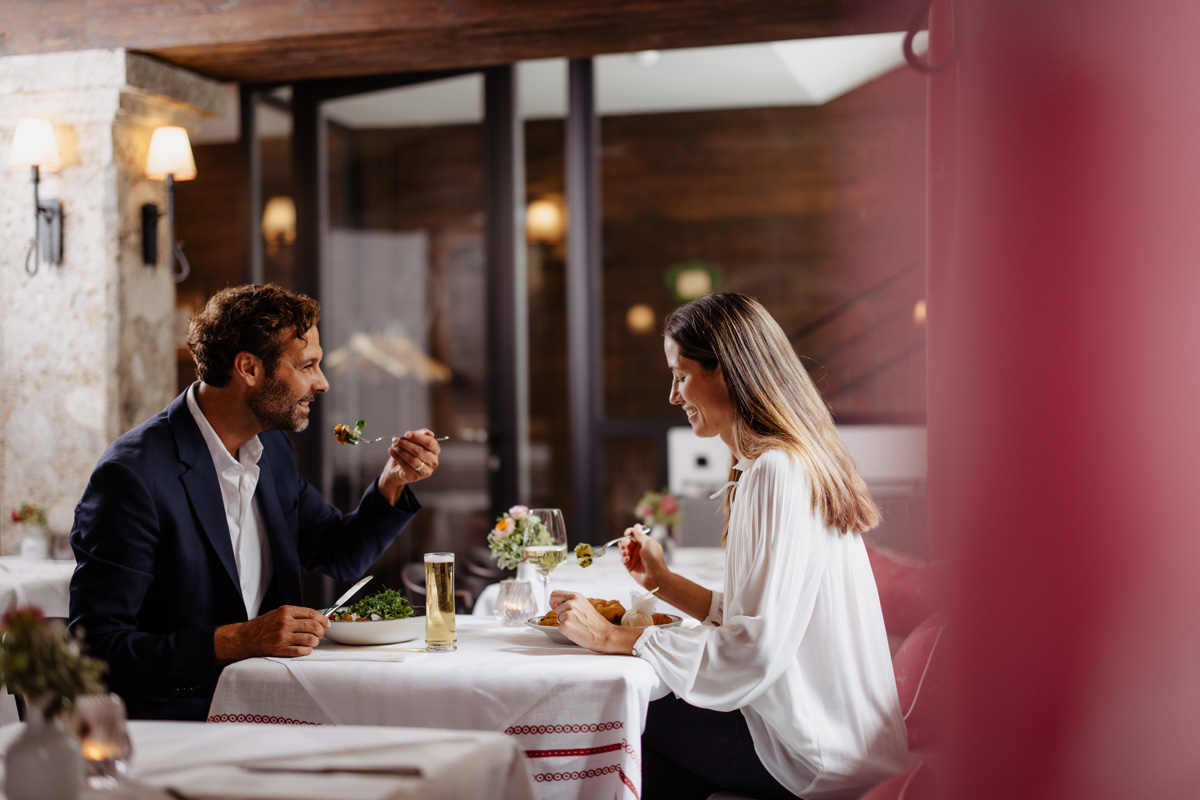
After a chamber music performance during “Date with Mozart” at the Residenz in the DomQuartier, you can enjoy Mozart’s favorite dish at Restaurant Herzl – lovingly prepared according to historical recipes.
Price: €24,– (only in combination with a same-day concert ticket)
Mozart’s favourite dish: liver dumplings on sauerkraut (alternative dishes available).
During the festival season, we kindly ask you to make a reservation at Restaurant Herzl by calling +43 662 8084 889.
'/thumbs/'
Monteverdi’s "L’Orfeo" was staged in the Carabinieri Hall in 1614: the first opera performance outside Italy.
'/thumbs/'
Early works by Mozart were first performed in the Knights Hall under his direction.
'/thumbs/'
In 1763, Mozart made his first concert appearance at the Salzburg court in the Conference Room.
On these special dates, our “Date with Mozart” lasts 15 minutes longer. In keeping with the religious occasion, the concert concludes with an excerpt from Joseph Haydn’s “The Seven Last Words of Christ on the Cross” as an encore. Joseph Haydn and Wolfgang Amadé Mozart shared a fatherly friendship. Mozart not only learned from Haydn how to write quartets, but was also influenced by him in other musical genres.
Wolfgang Amadé Mozart (1756-1791)
Divertimento in F major, K. 138 Allegro Andante Presto
String Quartet in C major, K. 157 without tempo indication Andante Presto
String Quartet in E-flat, K. 160 Allegro Un poco adagio Presto
Members of the Residenz-Ensemble Salzburg Emeline Pierre Larsen, Violin
Tatjana Isaenkowa, Violin
Romana Rauscher, Viola
Matthias Beckmann, Cello
An die Freude, K. 53 Das Lied der Trennung, K. 519 Abendempfindung, K. 523
Piano Sonata No. 11 in A major, K 331 Andante grazioso Menuetto Alla Turca. Allegretto
from „Die Zauberflöte,“ K. 620 Aria of Tamino „Dies Bildnis ist bezaubernd schön“
Members of the Residenz-Ensemble Salzburg
Bernhard Teufl, Tenor
Emese Wilhelmy, piano-forte
Loud and gentle – the Fortepiano At the end of the 17th century, a new keyboard instrument established itself: the fortepiano, which could be played loudly (forte) and softly (piano) – ideal for the princely chamber with its special soundscapes. In contrast to the harpsichord, whose strings were plucked with quills, the strings of the fortepiano are struck by small hammers covered with felt or leather. Our instrument is a replica of Michael Haydn’s fortepiano from 1803.
An die Freude, K. 53 Das Lied der Trennung, K. 519 Abendempfindung, K. 523
Piano Sonata No. 11 in A major, K 331 Andante grazioso Menuetto Alla Turca. Allegretto
from „Die Zauberflöte,“ K. 620 Aria of Tamino „Dies Bildnis ist bezaubernd schön“
Members of the Residenz-Ensemble Salzburg
Bernhard Teufl, Tenor
Emese Wilhelmy, piano-forte
Loud and gentle – the Fortepiano At the end of the 17th century, a new keyboard instrument established itself: the fortepiano, which could be played loudly (forte) and softly (piano) – ideal for the princely chamber with its special soundscapes. In contrast to the harpsichord, whose strings were plucked with quills, the strings of the fortepiano are struck by small hammers covered with felt or leather. Our instrument is a replica of Michael Haydn’s fortepiano from 1803.
Divertimento in F major, K. 138 Allegro Andante Presto
String Quartet in C major, K. 157 without tempo indication Andante Presto
String Quartet in E-flat, K. 160 Allegro Un poco adagio Presto
Members of the Residenz-Ensemble Salzburg
Carsten Neumann, Violin
Balasz Moldiz, Violin
Romana Rauscher, Viola
Matthias Beckmann, Cello
Loud and gentle – the Fortepiano At the end of the 17th century, a new keyboard instrument established itself: the fortepiano, which could be played loudly (forte) and softly (piano) – ideal for the princely chamber with its special soundscapes. In contrast to the harpsichord, whose strings were plucked with quills, the strings of the fortepiano are struck by small hammers covered with felt or leather. Our instrument is a replica of Michael Haydn’s fortepiano from 1803.
Violin Sonata No. 17 in C major, K. 296 Allegro vivace Andante sostenuto Rondo. Allegro
Piano Sonata No. 11 A major, K. 331 Andante grazioso Menuetto Alla Turca. Allegretto
Members of the Residenz-Ensemble Salzburg
Violin and piano-forte
Loud and gentle – the Fortepiano At the end of the 17th century, a new keyboard instrument established itself: the fortepiano, which could be played loudly (forte) and softly (piano) – ideal for the princely chamber with its special soundscapes. In contrast to the harpsichord, whose strings were plucked with quills, the strings of the fortepiano are struck by small hammers covered with felt or leather. Our instrument is a replica of Michael Haydn’s fortepiano from 1803.
An die Freude, K. 53 Das Lied der Trennung, K. 519 Abendempfindung, K. 523
Piano Sonata No. 11 in A major, K 331 Andante grazioso Menuetto Alla Turca. Allegretto
from „Die Zauberflöte,“ K. 620 Aria of Tamino „Dies Bildnis ist bezaubernd schön“
Members of the Residenz-Ensemble Salzburg
Tenor and piano-forte
Loud and gentle – the Fortepiano At the end of the 17th century, a new keyboard instrument established itself: the fortepiano, which could be played loudly (forte) and softly (piano) – ideal for the princely chamber with its special soundscapes. In contrast to the harpsichord, whose strings were plucked with quills, the strings of the fortepiano are struck by small hammers covered with felt or leather. Our instrument is a replica of Michael Haydn’s fortepiano from 1803.
Divertimento in F major, K. 138 Allegro Andante Presto
String Quartet in C major, K. 157 without tempo indication Andante Presto
String Quartet in E-flat, K. 160 Allegro Un poco adagio Presto
Members of the Residenz-Ensemble Salzburg
String Quartet
Loud and gentle – the Fortepiano At the end of the 17th century, a new keyboard instrument established itself: the fortepiano, which could be played loudly (forte) and softly (piano) – ideal for the princely chamber with its special soundscapes. In contrast to the harpsichord, whose strings were plucked with quills, the strings of the fortepiano are struck by small hammers covered with felt or leather. Our instrument is a replica of Michael Haydn’s fortepiano from 1803.
An die Freude, K. 53 Das Lied der Trennung, K. 519 Abendempfindung, K. 523
Piano Sonata No. 11 in A major, K 331 Andante grazioso Menuetto Alla Turca. Allegretto
from „Die Zauberflöte,“ K. 620 Aria of Tamino „Dies Bildnis ist bezaubernd schön“
Members of the Residenz-Ensemble Salzburg
Tenor and piano-forte
Loud and gentle – the Fortepiano At the end of the 17th century, a new keyboard instrument established itself: the fortepiano, which could be played loudly (forte) and softly (piano) – ideal for the princely chamber with its special soundscapes. In contrast to the harpsichord, whose strings were plucked with quills, the strings of the fortepiano are struck by small hammers covered with felt or leather. Our instrument is a replica of Michael Haydn’s fortepiano from 1803.
Violin Sonata No. 17 in C major, K. 296 Allegro vivace Andante sostenuto Rondo. Allegro
Piano Sonata No. 11 A major, K. 331 Andante grazioso Menuetto Alla Turca. Allegretto
Members of the Residenz-Ensemble Salzburg
Violin and piano-forte
Loud and gentle – the Fortepiano At the end of the 17th century, a new keyboard instrument established itself: the fortepiano, which could be played loudly (forte) and softly (piano) – ideal for the princely chamber with its special soundscapes. In contrast to the harpsichord, whose strings were plucked with quills, the strings of the fortepiano are struck by small hammers covered with felt or leather. Our instrument is a replica of Michael Haydn’s fortepiano from 1803.
An die Freude, K. 53 Das Lied der Trennung, K. 519 Abendempfindung, K. 523
Piano Sonata No. 11 in A major, K 331 Andante grazioso Menuetto Alla Turca. Allegretto
from „Die Zauberflöte,“ K. 620 Aria of Tamino „Dies Bildnis ist bezaubernd schön“
Members of the Residenz-Ensemble Salzburg
Tenor and piano-forte
Loud and gentle – the Fortepiano At the end of the 17th century, a new keyboard instrument established itself: the fortepiano, which could be played loudly (forte) and softly (piano) – ideal for the princely chamber with its special soundscapes. In contrast to the harpsichord, whose strings were plucked with quills, the strings of the fortepiano are struck by small hammers covered with felt or leather. Our instrument is a replica of Michael Haydn’s fortepiano from 1803.
Date with Mozart & Nannerl – Kids Special Our first ‘Date with Mozart’ for kids! The author duo Eva Krallinger-Gruber (known as ‘Fräulein Flora’) and Matthias Gruber will read from their newly published children’s book *She Sits Down at the Piano: Nannerl – The Life of Maria Anna Mozart* (published by Anton Pustet). Hannah Richter’s extraordinary illustrations will be displayed during the event. Members of our Residenz Ensemble will perform a violin sonata by Wolfgang Amadé Mozart, including an Allegro from the “Notenbuch für Nannerl” – the piano method Leopold Mozart compiled for his daughter Maria Anna’s lessons. In 1764, the proud father reported: “that my girl is one of the most skilled pianists in Europe, even though she is only 12 years old”. We commemorate a gifted pianist who performed in concert with her brother and is regarded as one of the world’s first piano teachers.
Members of the Residenz-Ensemble Salzburg
Tenor and piano-forte
Loud and gentle – the Fortepiano
At the end of the 17th century, a new keyboard instrument established itself: the fortepiano, which could be played loudly (forte) and softly (piano) – ideal for the princely chamber with its special soundscapes. In contrast to the harpsichord, whose strings were plucked with quills, the strings of the fortepiano are struck by small hammers covered with felt or leather. Our instrument is a replica of Michael Haydn’s fortepiano from 1803.
Wolfgang Amadé and Leopold Mozart
For Father’s Day, musicians from our Residenz Ensemble will perform Wolfgang Amadé Mozart’s Violin Sonata No. 17 in C major, K. 296, followed by an allegro from the ‘Notenbuch für Nannerl’ (Music Book for Nannerl), the piano method book that Leopold Mozart compiled for teaching his daughter Maria Anna (1751-1829). Leopold Mozart’s oeuvre as a composer comprises around 250 works in all possible genres. His position as court conductor in Salzburg was highly regarded. However, conflicts arose early on between father and son, until the latter’s departure for Vienna finally destroyed their relationship. Today, he is considered an excellent craftsman and teacher, but musically he stands in the shadow of his son.
Wolfgang Amadé Mozart (1756-1791)
Violin Sonata No. 17 in C major, K. 296
Allegro vivace
Andante sostenuto
Rondo. Allegro
Piano Sonata No. 11 in A major, K. 331
Andante grazioso
Menuetto
Alla Turca. Allegretto
Leopold Mozart (1719–1787)
Allegro in C major from the ‘Notenbuch für Nannerl’
Members of the Residenz-Ensemble Salzburg
Violin and piano-forte
Loud and gentle – the Fortepiano At the end of the 17th century, a new keyboard instrument established itself: the fortepiano, which could be played loudly (forte) and softly (piano) – ideal for the princely chamber with its special soundscapes. In contrast to the harpsichord, whose strings were plucked with quills, the strings of the fortepiano are struck by small hammers covered with felt or leather. Our instrument is a replica of Michael Haydn’s fortepiano from 1803.
An die Freude, K. 53 Das Lied der Trennung, K. 519 Abendempfindung, K. 523
Piano Sonata No. 11 in A major, K 331 Andante grazioso Menuetto Alla Turca. Allegretto
from „Die Zauberflöte,“ K. 620 Aria of Tamino „Dies Bildnis ist bezaubernd schön“
Members of the Residenz-Ensemble Salzburg
Tenor and piano-forte
Loud and gentle – the Fortepiano At the end of the 17th century, a new keyboard instrument established itself: the fortepiano, which could be played loudly (forte) and softly (piano) – ideal for the princely chamber with its special soundscapes. In contrast to the harpsichord, whose strings were plucked with quills, the strings of the fortepiano are struck by small hammers covered with felt or leather. Our instrument is a replica of Michael Haydn’s fortepiano from 1803.
Violin Sonata No. 17 in C major, K. 296 Allegro vivace Andante sostenuto Rondo. Allegro
Piano Sonata No. 11 A major, K. 331 Andante grazioso Menuetto Alla Turca. Allegretto
Members of the Residenz-Ensemble Salzburg
Violin and piano-forte
Loud and gentle – the Fortepiano At the end of the 17th century, a new keyboard instrument established itself: the fortepiano, which could be played loudly (forte) and softly (piano) – ideal for the princely chamber with its special soundscapes. In contrast to the harpsichord, whose strings were plucked with quills, the strings of the fortepiano are struck by small hammers covered with felt or leather. Our instrument is a replica of Michael Haydn’s fortepiano from 1803.
An die Freude, K. 53 Das Lied der Trennung, K. 519 Abendempfindung, K. 523
Piano Sonata No. 11 in A major, K 331 Andante grazioso Menuetto Alla Turca. Allegretto
from „Die Zauberflöte,“ K. 620 Aria of Tamino „Dies Bildnis ist bezaubernd schön“
Members of the Residenz-Ensemble Salzburg
Tenor and piano-forte
Loud and gentle – the Fortepiano At the end of the 17th century, a new keyboard instrument established itself: the fortepiano, which could be played loudly (forte) and softly (piano) – ideal for the princely chamber with its special soundscapes. In contrast to the harpsichord, whose strings were plucked with quills, the strings of the fortepiano are struck by small hammers covered with felt or leather. Our instrument is a replica of Michael Haydn’s fortepiano from 1803.
Piano Sonata No. 17 in C major, K. 296 Allegro vivace Andante sostenuto Rondo. Allegro
Piano Sonata No. 11 in A major, K. 331 Andante grazioso Minuet Alla Turca. Allegretto
Members of the Residenz-Ensemble Salzburg
Violin and forte-piano
Loud and gentle – the Fortepiano At the end of the 17th century, a new keyboard instrument established itself: the fortepiano, which could be played loudly (forte) and softly (piano) – ideal for the princely chamber with its special soundscapes. In contrast to the harpsichord, whose strings were plucked with quills, the strings of the fortepiano are struck by small hammers covered with felt or leather. Our instrument is a replica of Michael Haydn’s fortepiano from 1803.
Adagio in B flat major for cello and piano, K. 358
(based on the Sonata for Piano for Four Hands) Andante Presto
Sonata in E minor for cello and piano, K. 304
(based on the Violin Sonata) Allegretto Tempo di Minuetto
Piano Sonata No. 11 in A major, K. 331 Andante grazioso Menuetto Alla Turca. Allegretto
Members of the Residenz-Ensemble Salzbur
Cello and piano-forte
Loud and gentle – the Fortepiano At the end of the 17th century, a new keyboard instrument established itself: the fortepiano, which could be played loudly (forte) and softly (piano) – ideal for the princely chamber with its special soundscapes. In contrast to the harpsichord, whose strings were plucked with quills, the strings of the fortepiano are struck by small hammers covered with felt or leather. Our instrument is a replica of Michael Haydn’s fortepiano from 1803.